Project · Egypt spare parts price tracker
Seeing which of 13 Egyptian sellers is cheaper on 154 shared spare parts, every week
The problem
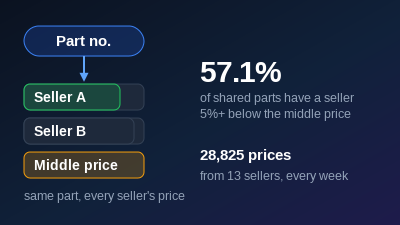
An Egyptian spare-parts retailer sells the same parts as 13 online shops whose prices move weekly. Nobody knows which competitor is cheaper on which part until the customer buys elsewhere.
The solution
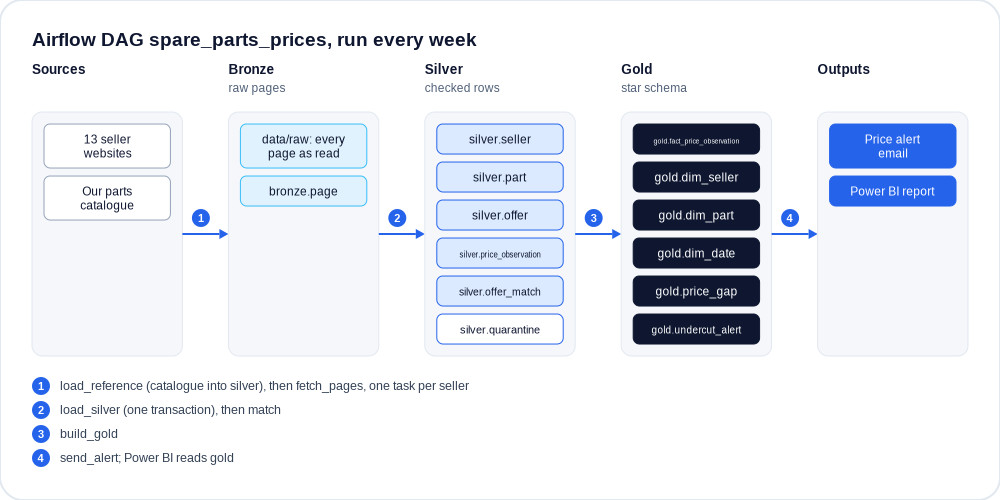
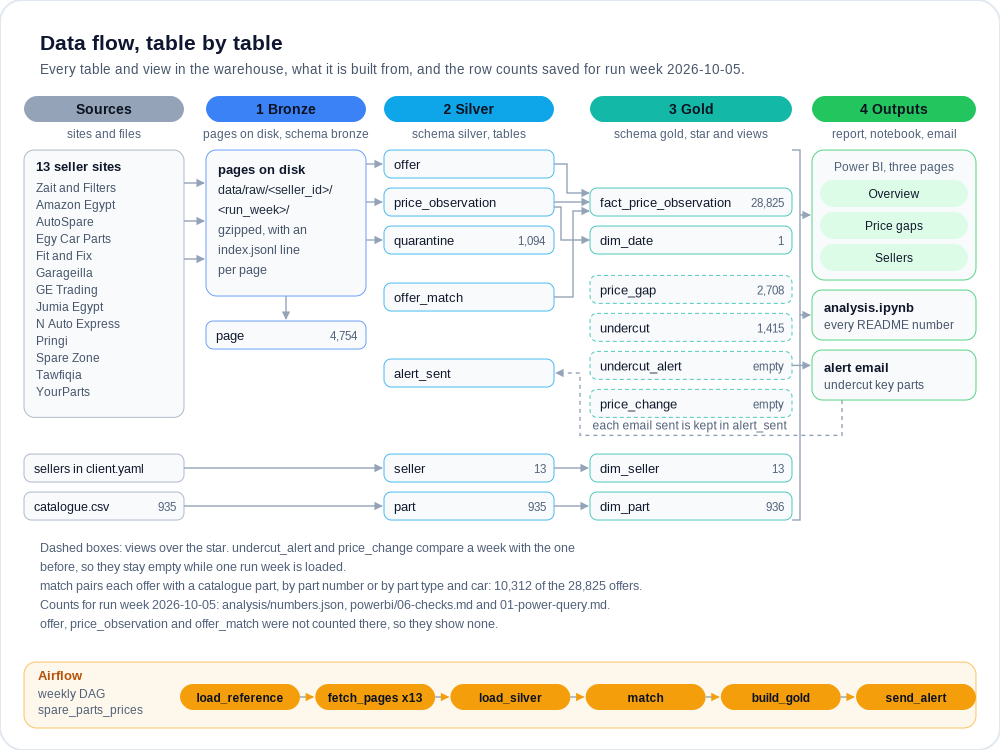
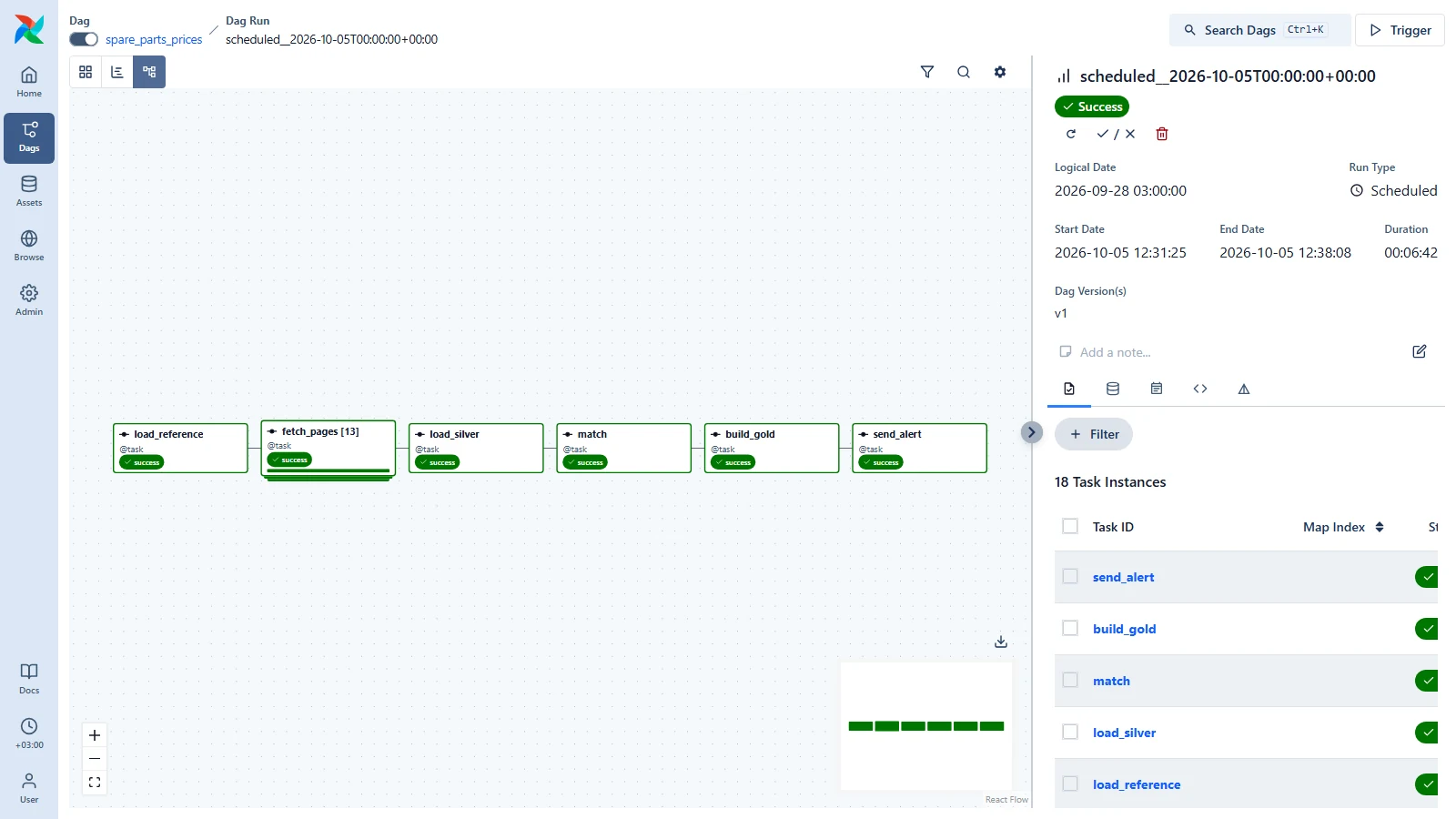
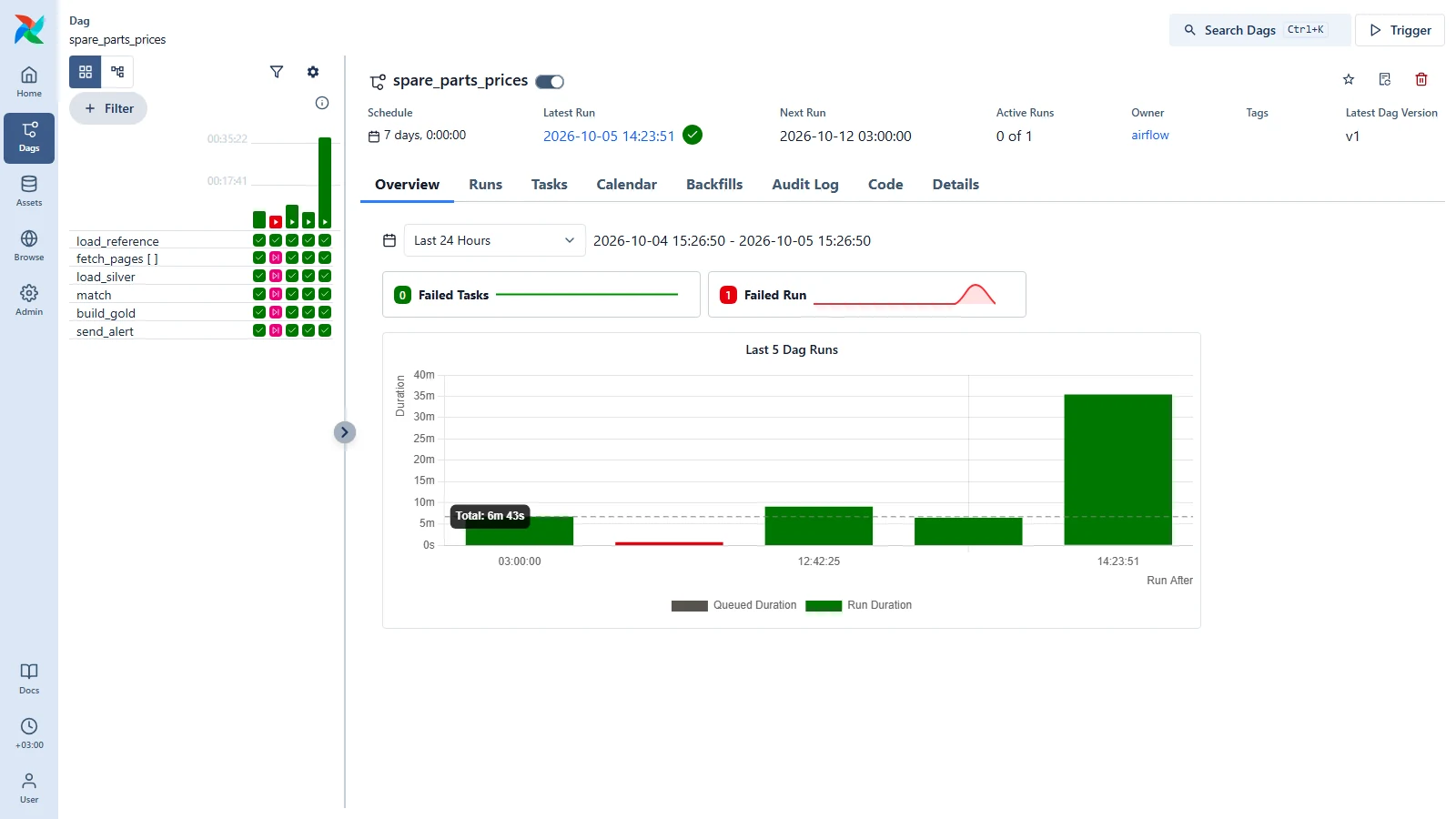
A weekly pipeline reads 13 sellers' prices, checks every row, keeps each price with its date, matches parts by part number, and emails when a competitor undercuts us. Gaps show in Power BI.
How it works
- Collect: Prices read weekly from 13 Egyptian spare-parts sellers
- Check: Every row checked; a bad row is set aside with its reason
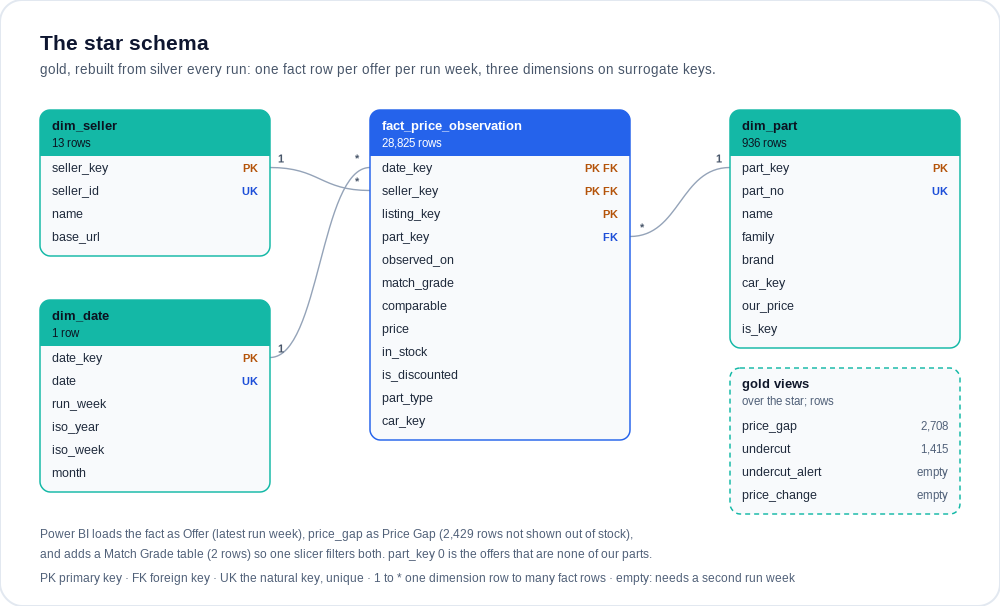
- Store: Every price kept with its date
- Match: The same part matched across sellers by part number
- Report: An email when a competitor undercuts us, and Power BI gap pages
A closer look
The code
offers.append({
    "listing_key": str(p["id"]),
    "title": p["title"],
    "price": price,
    "currency": "EGP",
    "is_discounted": bool(price and was and was > price),
    "url": f"{base}/products/{quote(p['handle'])}",
    "brand": (p.get("vendor") or "").strip() or None,
    "part_no": scrape.part_code(variant.get("sku")),
    "in_stock": variant.get("available"),
})The impact
- Every competitor price read weekly, no browsing.
- Where a competitor sells below us, seller by seller.
- A one-week promotion stands apart from a new normal.
- Failing rows set aside with a reason, never dropped.
The result
28,825 prices from 13 sellers in one weekly run: 88 of 154 shared parts (57.1%) have a seller at least 5% below the market's middle price.